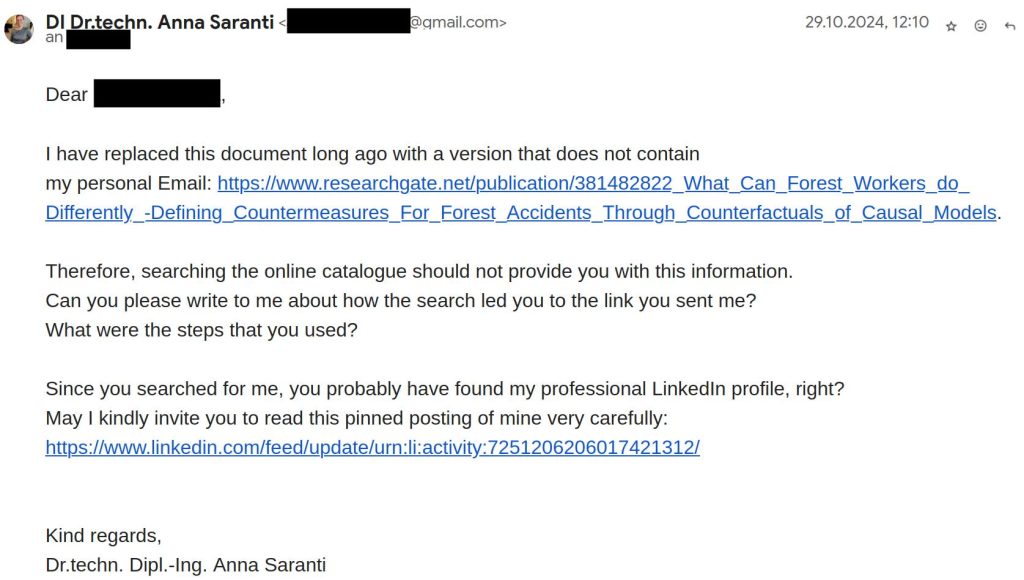
On the 18.10.2024 an Academic Publishing Editor sent me an EMail with the question if I consider
“publishing your research” refering to the publication “On the Application of Machine Learning Models for Prediction and Explainable, Actionable Insights Supporting Forest Workers Safety”.
From the EMail, it is not clear what they want to do with a manuscript that is already published.
I was not sure if it would be part of a book or a series. At that time, my statement about not doing reviews and publications was already online, so it was quite surprising to me how an Academic Publishing would invite me for a publication without searching for me online, finding out that I don’t do that in general.
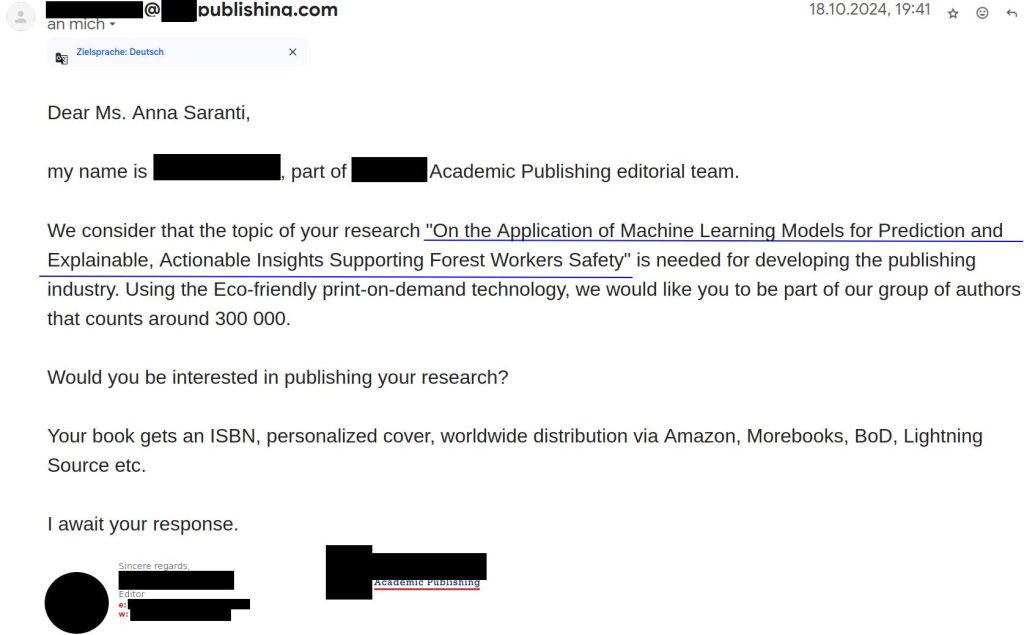
I asked the person who sent the EMail directly “where did you get my personal email?”. Instead of a clear answer, this person came back reminding me of their “offer” one week later, without answering where did they find my personal EMail. From my experience, many times people in the state sector pretend not to have read the EMails, but now I was communicating with a professional in the private sector. As one can see in the figure, they’ve got the message and now they are suggesting publications in the form of a book; on the other hand that showed me that I need to explicitly refine my statement and say: “I don’t do reviews, I don’t publish (articles, books), … ” or else this will probably not stop. What was surprising to me is that the aforementioned publication has no means the extent of a book and it might be a way to collaborate again with the co-authors – which is not one of my goals.
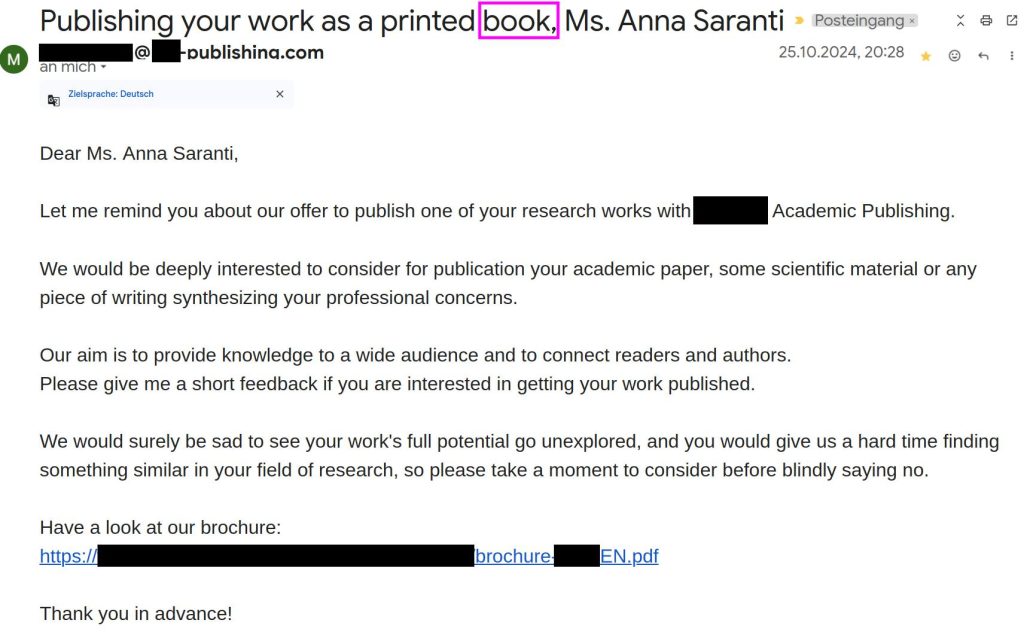
I asked again “this is the second time I am asking you where did you find my personal Email.”. I got the following reply which shows again this ridiculously long link from the FORMEC presentation that can only be found by dedicated search or by one of the co-authors. This publishing editors must really want me in their authors list – something that never happened so intrusively while I was in academia.
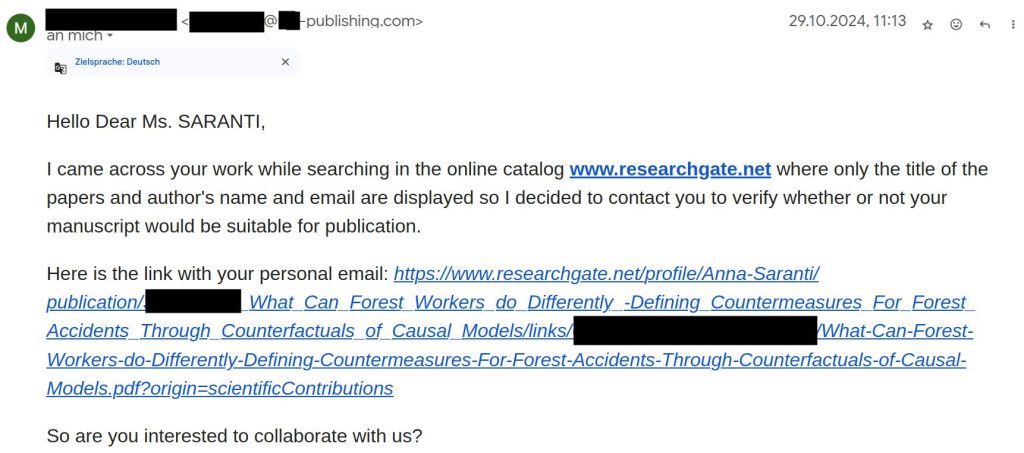
My answer can be seen in the figure. “I have replaced this document long ago with a version that does not contain my personal Email: https://www.researchgate.net/…/381482822_What_Can….
Therefore, searching the online catalogue should not provide you with this information.
Can you please write to me about how the search led you to the link you sent me? What were the steps that you used? Since you searched for me, you probably have found my professional LinkedIn profile, right? May I kindly invite you to read this pinned posting of mine very carefully:
https://www.linkedin.com/…/urn:li:activity…/”.
Needless to say, that I’ve never heard from this person or anybody from those publications ever again, not even for an apology – that characterizes them. If they really did a search, and wanted to collaborate with me, they would be able to tell me how they did it right? In the end I am very happy that I did not collaborate with publishers that can’t answer so simple questions.